Choosing a Translation
What the choice of translation decides about the English Iliad
As an Amazon Associate, we earn from qualifying purchases.
Every translation of the Iliad is an interpretation. The Greek is ancient, dense and musical in ways English cannot fully replicate, so each translator's choices shape how the poem reads. Five translations are compared, among them a free PDF of Pope's classic verse translation, alongside the leading modern options for English-language readers.
Translation Comparison at a Glance
| Translation | Readability | Accuracy | Tone | Best For |
|---|---|---|---|---|
| Fagles (1990) | High | Very good | Dramatic, propulsive | First-time readers |
| Wilson (2023) | High | Very good | Clear, direct | Readers wanting modern English |
| Pope (1715–20) | Moderate | Loose | Rhymed, Augustan | Classic English verse |
| Green (2015) | Moderate | Excellent | Precise, rhythmic | Close reading, second read |
| Lattimore (1951) | Low | Excellent | Literal, formulaic | Scholars, readers of the Greek |

#1 — The Iliad — trans. Robert Fagles (1990)
- Readability: High — Flowing verse that reads quickly
- Accuracy: Very good — Close to the Greek without strict literalism
- Tone: Dramatic force throughout
- Accessibility: Suited to general readers; introduction and notes by Knox
Which translation suits which reader
- Fagles suits first-time and general readers who want flowing, readable verse with dramatic force.
- Wilson suits readers who want clear contemporary English in iambic pentameter, at the cost of more lines than the Greek.
- Pope suits readers who want classic English verse in rhyming couplets, a major poem in its own right, and accept a freer rendering.
- Green suits readers who want a rendering close to the Greek, line by line, with a glossary, synopses and notes.
- Lattimore suits scholars and readers of the Greek who want the most literal version, formulas and Greek spellings intact.

#2 — The Iliad — trans. Emily Wilson (2023)
- Readability: High — Clear contemporary English in steady verse
- Accuracy: Very good — Needed more lines than the Greek
- Tone: Contemporary, direct
- Accessibility: Plain modern diction suits newcomers
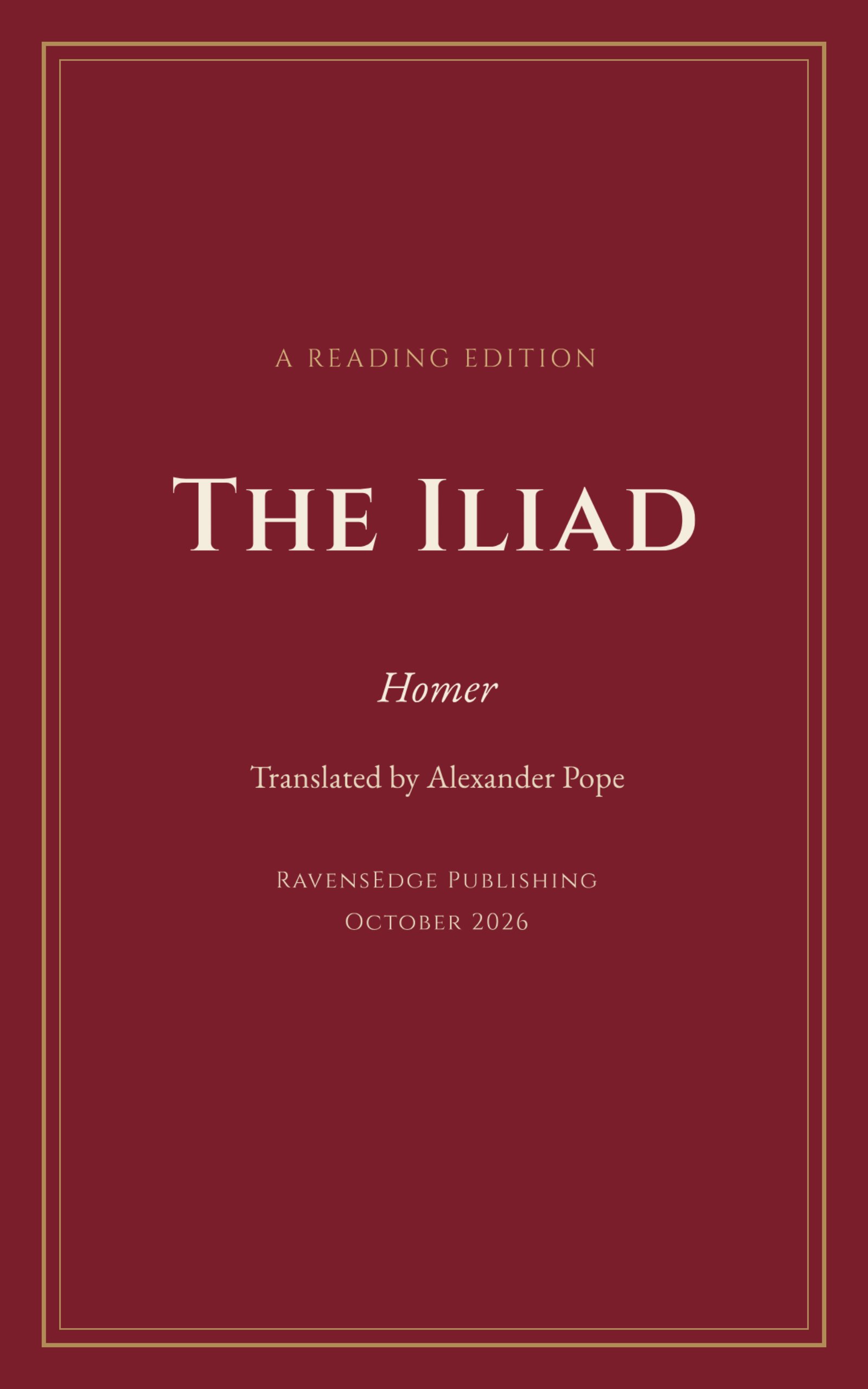
#3 — The Iliad — trans. Alexander Pope (1715–20)
- Readability: Moderate — Rhymed couplets in eighteenth-century English
- Accuracy: Loose — Freer with the Greek than modern versions
- Tone: Grand, formal verse
- Accessibility: Free online and as a PDF

#4 — The Iliad — trans. Peter Green (2015)
- Readability: Moderate — Long, loosely six-beat lines; moderate pace
- Accuracy: Excellent — Follows the Greek line by line
- Tone: Keeps Homer's sentence shape
- Accessibility: Introduction, synopses, glossary, notes, bibliography

#5 — The Iliad — trans. Richmond Lattimore (1951)
- Readability: Low — Free six-beat line; slow going at first
- Accuracy: Excellent — Most literal; keeps formulas and Greek spellings
- Tone: Plain, formulaic, close to Homer
- Accessibility: Demanding; 2011 edition adds Martin's introduction
About the Translators
Robert Fagles (1933–2008) was Arthur W. Marks '19 Professor of Comparative Literature at Princeton. His Iliad appeared in 1990 and his Odyssey in 1996, and both became best-sellers. He also translated Virgil's Aeneid, Aeschylus's Oresteia and Sophocles's Theban plays.
Emily Wilson is Professor of Classical Studies at the University of Pennsylvania. Her Odyssey was published in 2017 and her Iliad, from W. W. Norton, in 2023. She is the first woman to translate both Homeric epics into English.
Alexander Pope (1688–1744) published his Iliad from 1715 to 1720, in rhyming heroic couplets. The work stands as a major English poem in its own right as well as a version of Homer.
Peter Green (1924–2024) was a classical scholar, historian of the Hellenistic age and translator. The University of California Press published his Iliad in 2015 and his Odyssey in 2018.
Richmond Lattimore (1906–1984) taught Greek at Bryn Mawr College from 1935. The University of Chicago Press published his Iliad in 1951. A 2011 edition added an introduction and notes by Richard Martin.
Themes
The first word of the Iliad is mēnin, from mēnis, meaning wrath or rage, the subject the poem announces. The work, in dactylic hexameter and 24 books, covers a few weeks in the tenth year of the Trojan War. It begins with the quarrel between Achilles and Agamemnon over Briseis and ends with the funeral of Hector.
Each translator renders the opening differently. Pope writes "Achilles' wrath, to Greece the direful spring / Of woes unnumber'd, heavenly goddess, sing!" Fagles gives "Rage—Goddess, sing the rage of Peleus' son Achilles". Wilson has "Goddess, sing of the cataclysmic wrath", and Lattimore "Sing, goddess, the anger of Peleus' son Achilleus". Pope's rhymed couplets, Fagles's flowing verse, Wilson's iambic pentameter and Lattimore's free six-beat line each give the first line a different shape.
Frequently Asked Questions
Which Iliad translation is best for first-time readers?
Fagles is the most widely recommended for general readers, with flowing, readable verse and dramatic force. Wilson, in clear contemporary English, also suits first-time readers. Lattimore is the slowest going for a first reading.
Fagles vs Wilson — which Iliad translation suits which reader?
Fagles offers flowing, dramatic verse and suits general readers. Wilson writes in iambic pentameter and clear contemporary English, and suits readers who want a modern idiom. Wilson needed more lines than the Greek.
Is the Lattimore Iliad good for beginners?
Lattimore is the most literal of the five and the slowest going for a first reading. The translation keeps Homer's formulas and Greek spellings of names, which suits scholars and readers of the Greek more than beginners.
Which Iliad translation is most accurate?
Lattimore is the most literal of the five, following the Greek line by line and keeping Homer's formulas. Green is also close to the Greek. Pope is freer with the Greek than the modern translations.
Is there a free Iliad translation to download?
Yes. The RavensEdge Publishing edition of Pope's Iliad is a free PDF. It has all 24 books, with Pope's Preface, the Argument of each book and his Concluding Note, and can be read online book by book or downloaded as a bookmarked 530-page PDF.
What does the first word of the Iliad mean?
The first word, mēnin, comes from mēnis, meaning wrath or rage. It names the subject the poem announces: the wrath of Achilles.
Translator and edition details checked against the publishers’ editions, university records and published reviews. Last reviewed: October 2026.
As an Amazon Associate, we earn from qualifying purchases.
The Iliad reading guide covers the characters, the books and the background. Pope’s translation can be read online book by book. The companion poem’s translations are compared at readingtheodyssey.com.